Studio Projects – March 23
Collaborative Class Quilt
Artist Statement
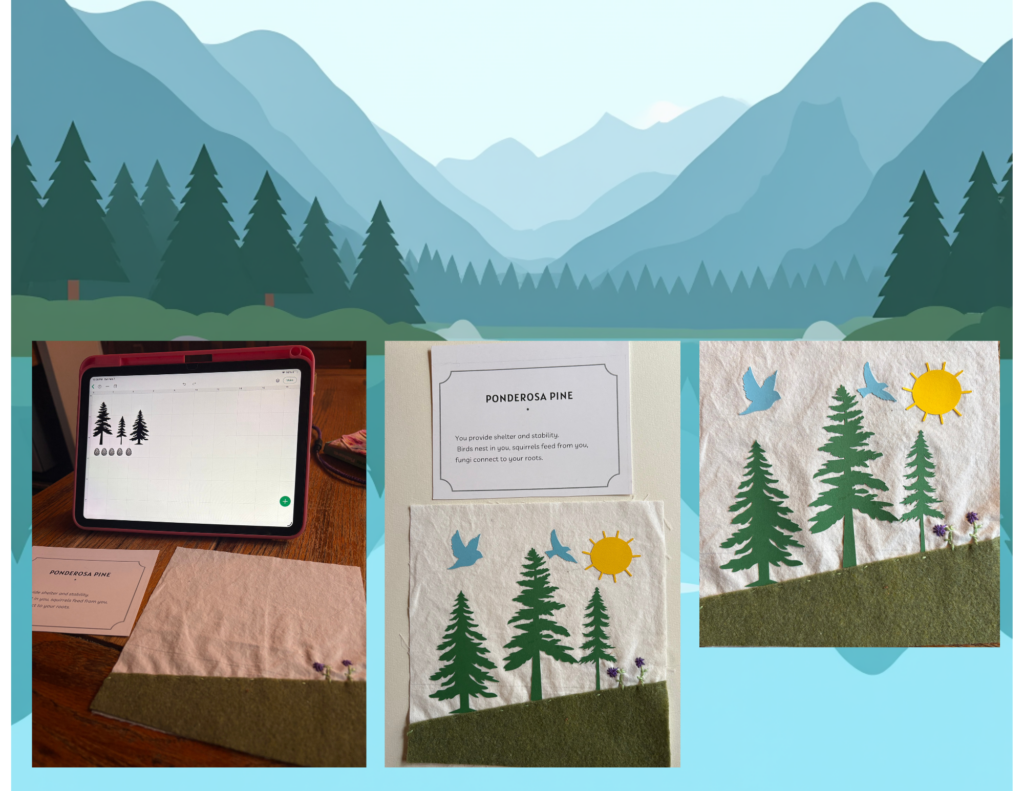
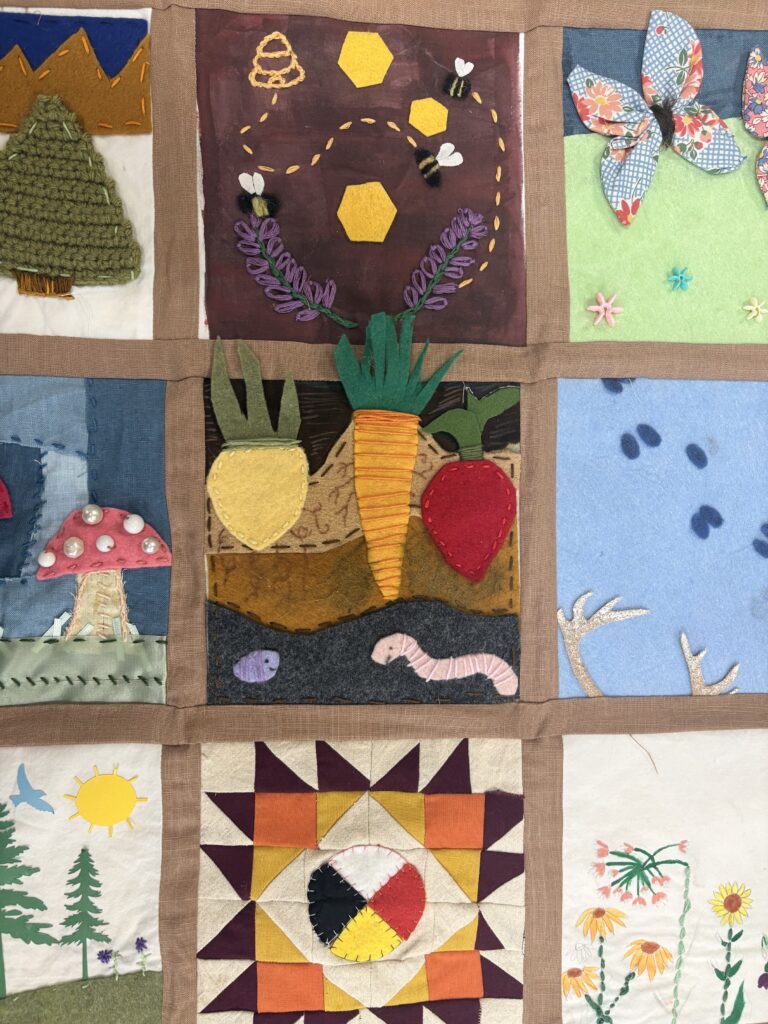
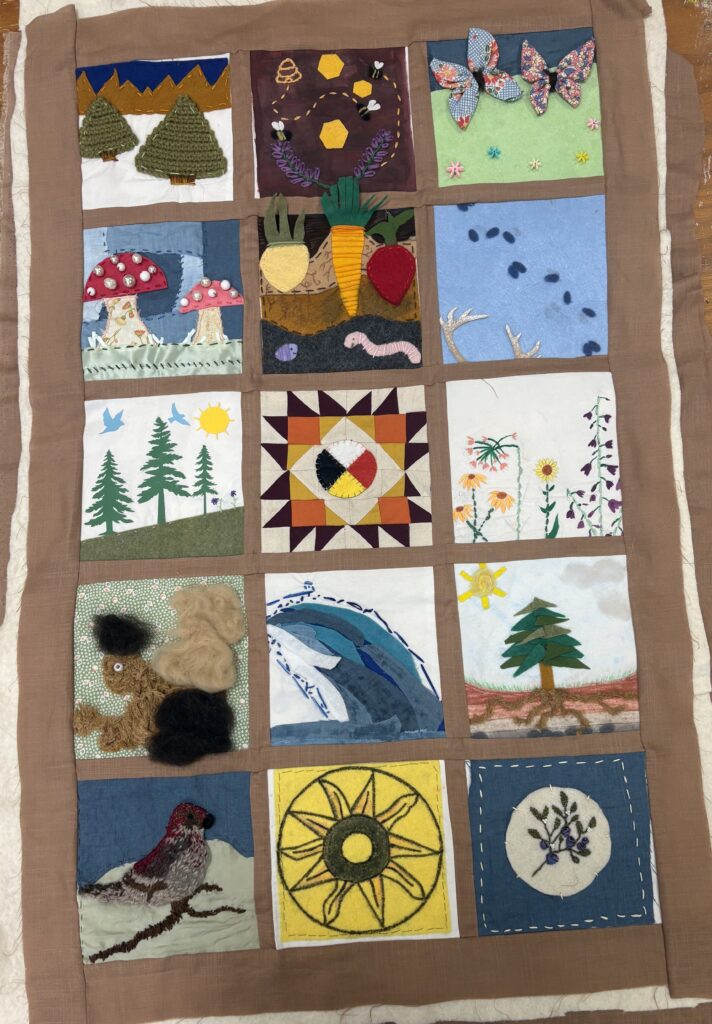
For the collaborative class quilt, I was assigned Ponderosa Pine as my theme. I explored incorporating natural materials such as pine needles and cones, but ultimately chose more durable elements to ensure longevity. After experimenting with felting and reconsidering my initial ideas, I created a mixed-media piece combining felt, stitching, embroidered flowers, and paper die cuts.
The trees serve as the focal point, while birds, sunshine, and surrounding elements suggest the broader ecosystem that supports them. This layered approach reflects the interconnectedness of environment and habitat. While I later considered ways to introduce more colour and depth, the process emphasized adaptability and thoughtful material choice within a collaborative framework.
This project highlighted how individual contributions come together to create a cohesive whole, much like the ecosystems represented within the quilt itself.
Connection to BC Curriculum
This project incorporates some really cool connections with the BC Curriculum. There are so many ways you could incorporate cross-curricular learning into this eco-system themed collaborative project. I went and did a little searching to see where it would best fit into the curriculum for science and art.
- Grade 3 Science Big Idea: Living things are diverse, can be grouped, and interact in their ecosystems.
- Grade 3 Science Content: biodiversity in the local environment, the knowledge of local First Peoples of ecosystems, energy is needed for life
- Grade 3 Core Competencies: co-operatively design projects, experience and interpret the local environment, make observations about living and non-living things in the local environment and demonstrate curiosity about the natural world
- The Big Idea about “Living Things” appears in the science curriculum in Kindergarten through Grade 2 and also in Environmental Science 11.
- The collaboration component of this project leads itself to many communicating and collaborating core competencies.
- Grade 3 Art Core Competencies: create artistic works collaboratively and as an individual, using ideas inspired by imagination, inquiry, experimentation, and purposeful play, Refine ideas, processes, and technical skills in a variety of art forms
- Grade 3 Art content: visual arts: elements of design: line, shape, space, texture, colour, form (visual arts); principles of design: pattern, repetition, rhythm (visual arts), contrast, emphasis
Big Idea: Explore connections of place through creative expression
I think this project could easily extend beyond science and art. Students could write paragraphs, stories or poems about the ecosystem they have created and explored. This project would pair nicely with a filed trip where students hike or camp or explore a certain area and then design their quilt based on the ecosystem they explored on their adventure.
There is a really cool board game that would be perfect to play with this activity — it’s called Forest Shuffle. We just got it at Christmastime last year and my daughter and I are loving it. You created forests of different species of tress and off those tree 4 different items can “live” — birds, butterflies, mammals, fungi, amphibians, bugs. It’s strategic because you win the game by getting the highest scoring forest — the better the ecosystem, the more points you get. It’s genius for learning about ecosystems.
Self-Assessment
- Intentional use of the space — YES!
- Multiple materials (2+) — YES!
- Your element, represented within the context of our local forest ecosystem — YES!
Cardboard Loom Weaving
Artist Statement
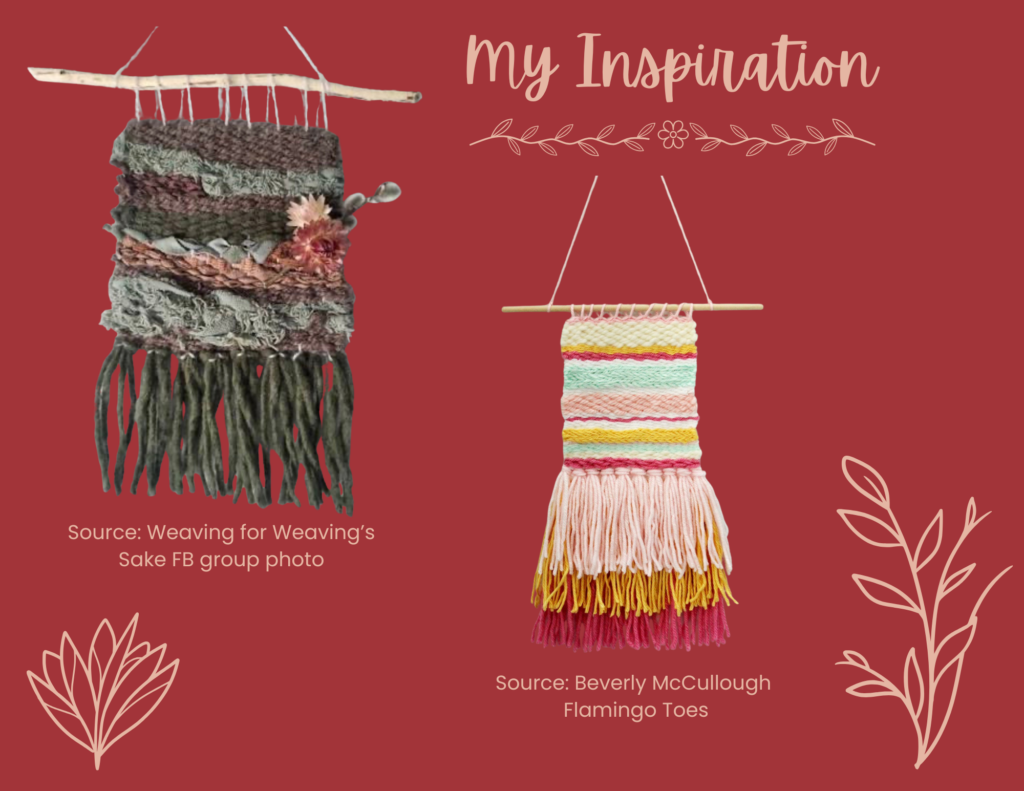
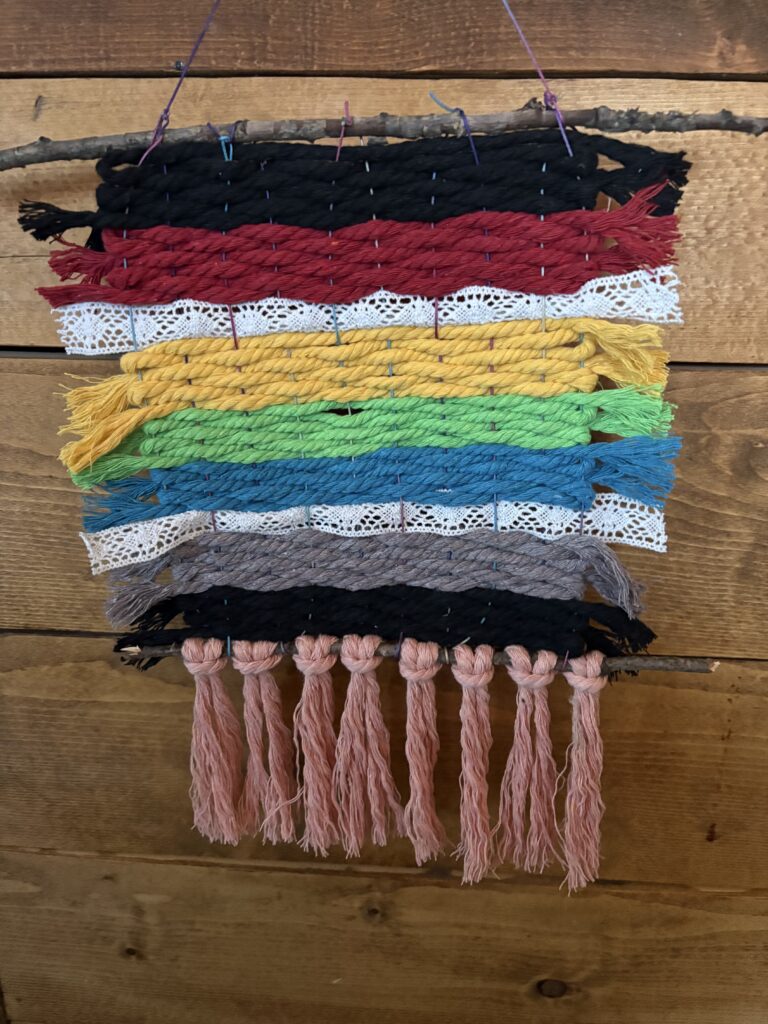
This weaving project explores texture, layering, and the contrast between organic and delicate materials. Inspired by contemporary fibre art pictured below, I used cotton macramé yarn and a found branches as the structural base, combining natural form with softer elements such as lace ribbon, fringe, and tassels.
With limited prior weaving experience, I approached the process experimentally, incorporating fringes, tassels and varied techniques to create movement and depth. Although I initially planned for asymmetry, material constraints influenced the final composition. Rather than resisting those limitations, I adapted the design. The use of black yarn at the top and bottom visually anchors the piece, framing the lighter interior textures.
This work reflects both creative risk-taking and adaptability, balancing intention with responsiveness throughout the making process.
Self-Assessment
- My weaving is at least 6″ long — YES!
- My thread tension is correct — YES!
- Loose ends are trimmed neatly –YES!
- Work was carefully removed from the loom, warp threads pulled tightly and tied neatly — YES!
Reflection on the Process
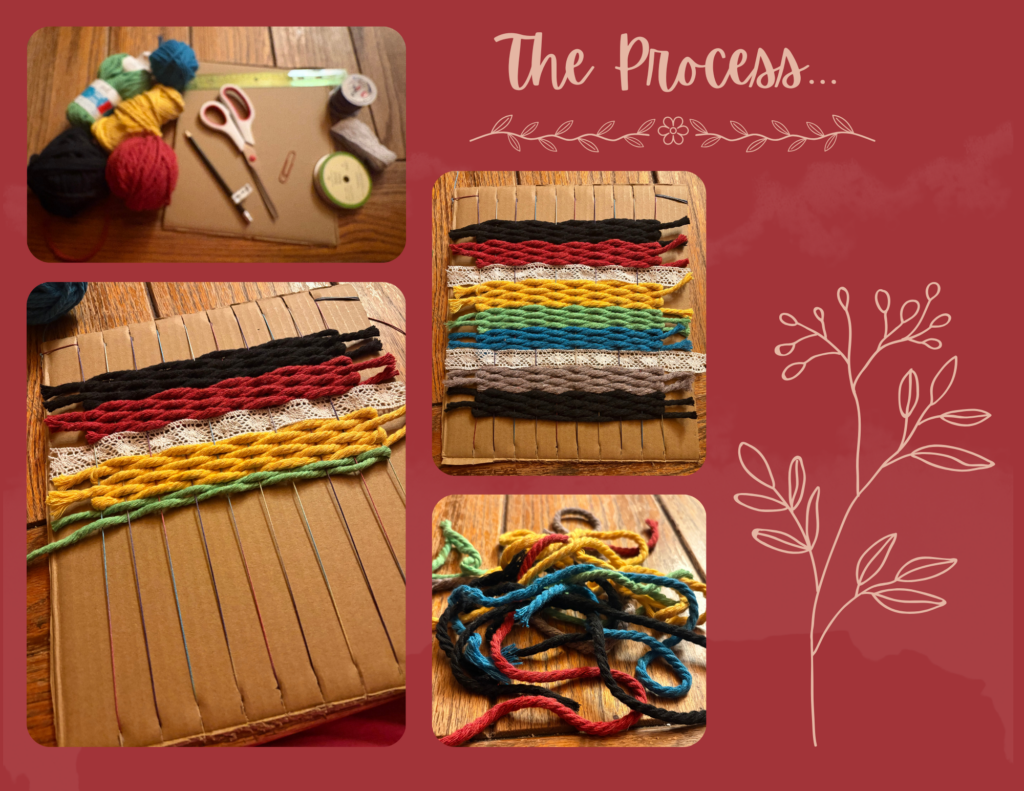
I was disappointed how the weaving project came off the loom. It looked beautiful on the loom and then got all squished and disgruntled when I tried to take it off. I knew I wanted to put a branch on the top and the bottom but that added a level of trickiness to it all. I cut the top threads and tied them carefully. The bottom ones I slipped off and carefully wove the branch through them. Neither of the two techniques prevented it all from being squished together. I’m glad I took process photos! I also purposely left the side threads as I wanted tassels on the sides and bottom. This whole project was a steep learning curve, but I enjoyed the process and experimenting.
Big Idea: Working within real classroom resources
I think this is a real battle for teachers. How do you balance wanting to do fun, creative, meaningful projects with limited budget and supplies. I feel like I have some significant experience with this as I was a Girl Guide leader for many years and I really wanted the girls to have fun art/craft projects but we had a limited budget. Sometimes it just takes a little look around and you can find supplies for a cheaper price. Sometimes you can “crowd source” items that you need and sometimes the best projects happen when you give students/kids limited supplies and they have to think outside the box and create something from next to nothing. I really liked how we did this with scraps and recycled cardboard. You could definitely ask students to bring some yarn from home or hit up the thrift stores for some yarn. I have no idea how teachers actually buy all the supplies they need with just $1000 a year. Wow. Thankfully there is a pretty good art supply room in each school in Cranbrook. Thankfully I’m pretty resources and creative with finding what I need. My stash of magazines is already growing for when we do collages in our practicum class in April!
Monochromatic Atmospheric Perspective
Artist Statement
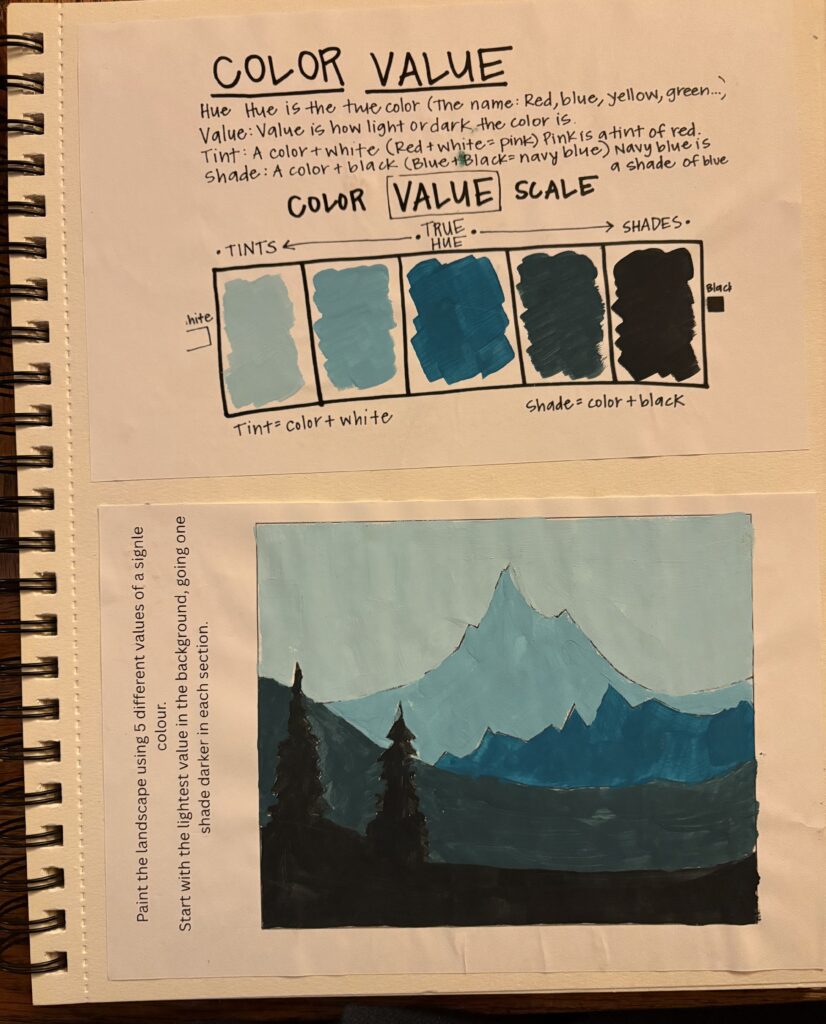
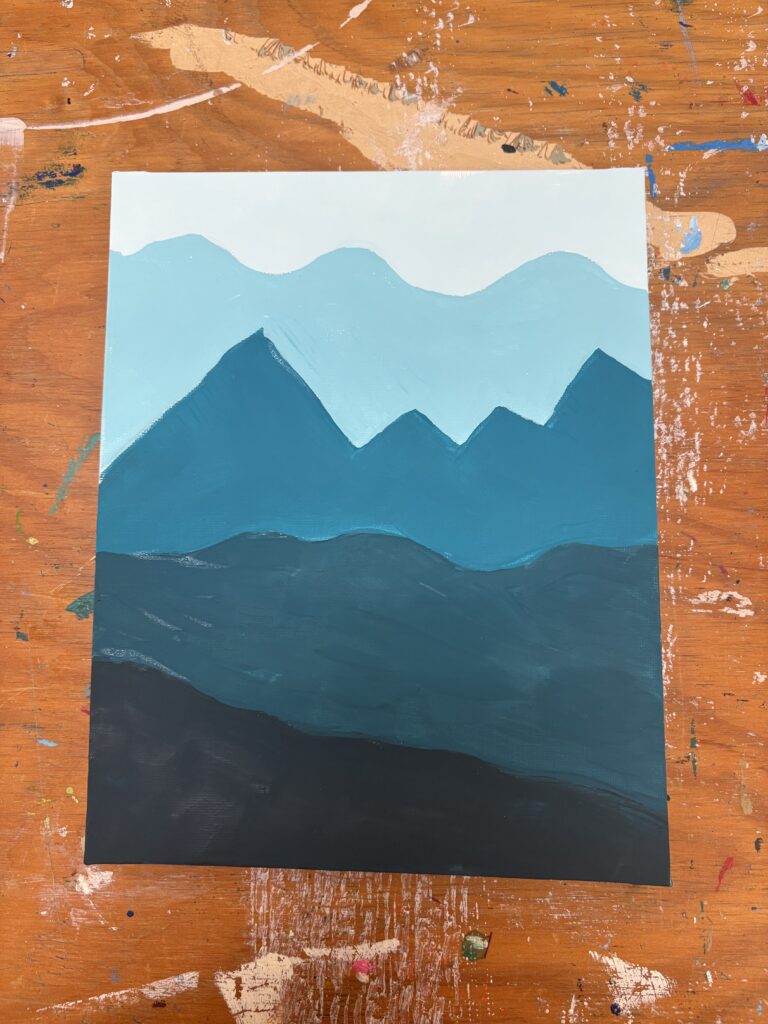
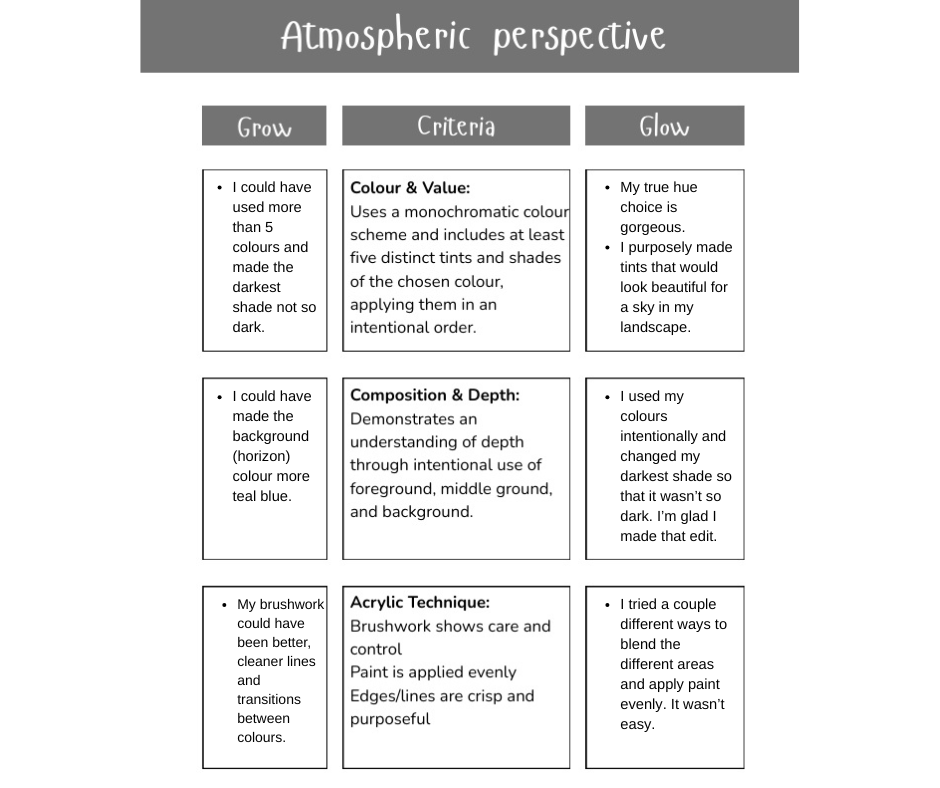
This monochromatic landscape explores atmospheric perspective through value and colour variation. Beginning with a single teal hue, I created two tints and two shades by mixing the true hue with white or black, producing a range of tones used to build depth within the composition. The darkest values were placed in the foreground, gradually transitioning to lighter tones toward the sky to create the illusion of distance.
I found the technical aspects of the process challenging, particularly maintaining crisp lines between sections of colour. Despite these difficulties, the limited palette emphasized the power of value in shaping a landscape. The final piece highlights how subtle shifts in tone can create depth, atmosphere, and visual impact within a simple colour framework.
Self-Assessment
An Afternoon of Painting with Little Friends
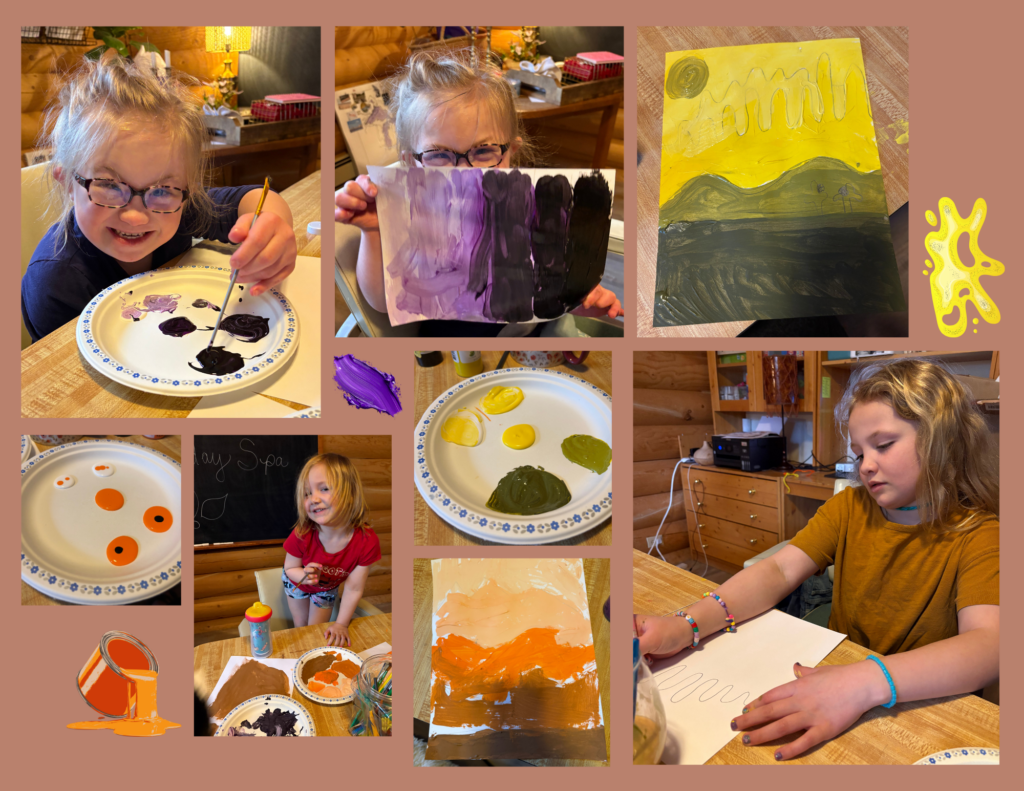
As soon as we started this project I knew that some little friends would love doing something similar. Cue a 5 year old, a 7 year old who happens to have Down syndrome and a 9 year old. I gave them a mini lesson about hues, tints and shades — we watched a YouTube video about how to make them and looked at a few options of landscapes that were painted like we did in class. I also showed them mine. They jumped right in, picked their “true hue” and began mixing their tints and shades. Here are some process pictures and the end results for each girl. My little friend Annie was struggling to paint the landscape so we did straight lines on her paper and she painted a strip of each tint/shade. She loved it as much as the other girls loved it — just in her own unique way. Her smile says it all.
Two of the girls went on to paint picture after picture, covering every surface in their homeschool classroom as drying racks. I think that would be considered a win. A little inspiration + some paint and cardstock = hours and hours of creativity!
Photography Series
Artist Statement
Photography has always been meaningful to me. I love having a visual record of my life including moments, milestones, and memories captured in time. When my children were young, I made physical scrapbooks. As they grew older, Facebook became a kind of virtual scrapbook for our family. I often scroll back through photos and am reminded of the many sweet memories we’ve shared.
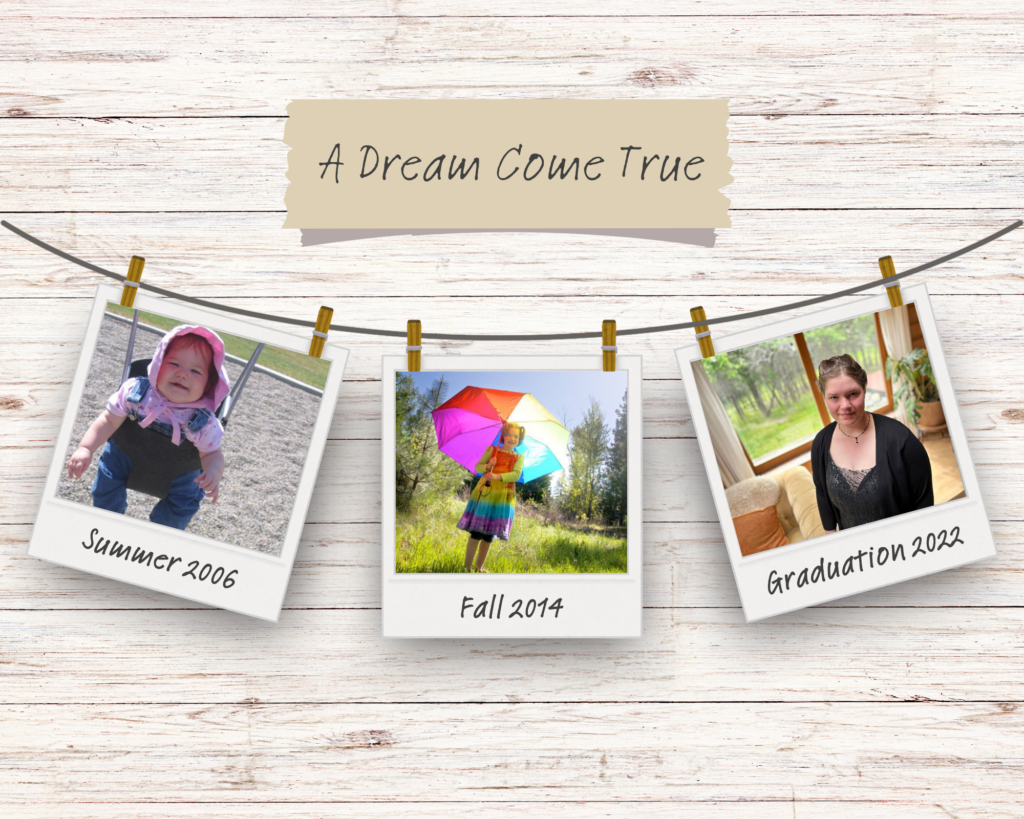
Choosing images for this project was difficult, but I ultimately selected three photographs of my daughter that capture different moments in her life. The first shows her as a baby happily swinging at the park down the road from our home in Lethbridge. The second is one of my favourite photos from a family photo session on the Rails to Trails path near Marysville. I have always loved rainbows, so I found her a rainbow dress and brought along a rainbow umbrella. The photograph, taken by Ryan McKenzie, turned out beautifully. The third photo was taken while she was getting ready for graduation at a friend’s house. She was nervous, we shared a few tears, and she looked absolutely stunning in her dress with her hair up.
I chose these images because they represent my greatest dreams come true. Being a mother has changed me in all the right ways. It hasn’t always been easy, but it has always been worth it. Every sleepless night, milestone, tear, hug, and celebration has shaped the journey. If I could change one thing about the past twenty-two years, it would simply be to slow them down.
Big Idea: How does artwork hold stories, relationships and history?
Intentional art projects can help students explore how artwork holds stories, relationships, and history. In a classroom or homeschool setting, students could create personal pieces such as photographs, drawings, or mixed media artwork that represent meaningful memories, family traditions, or important relationships in their lives. Displaying these works in the classroom invites students to share their stories with one another and helps build connection, empathy, and appreciation for the diverse experiences that shape a community.
This idea connects to the First Peoples Principles of Learning, which emphasize that learning is embedded in memory, history, and story. When students create and share personal artwork, they honour storytelling and lived experience as meaningful ways of knowing and understanding the world.
Cover photo by Alice Donovan Rouse on Unsplash